Matthew 20:24—21:17
Ministries > Thru the Bible with Dr. J. Vernon McGee
https://www.oneplace.com/ministries/thru-the-bible-with-j-vernon-mcgee/
Facebook Twitter Instagram YouTubeWhat one city continues to make the front page of newspapers and websites and will continue to be the centerpiece of history until Jesus comes again? Yes, Jerusalem. Follow in Jesus’ footsteps through the Gospel of Matthew as He moves steadily toward Jerusalem with one purpose—to die for us.
References
Steve Schwetz: There's only one city on earth that continues to make the front page of newspapers and websites and will remain the centerpiece of history until Jesus comes again. Can you guess it? Welcome to Thru the Bible with Dr. J. Vernon McGee. If you guessed Jerusalem, then you get an A plus. Good job. This beautiful, timeless, strategic city of God is our focus as the Bible bus comes to Matthew 20 beginning at verse 24. We've been following in the footsteps of Jesus through the gospel of Matthew, and now he moves steadily toward Jerusalem with one purpose: to die for us. I'm Steve Schwetz, and as you find your seat on the Bible bus, let's listen to a message from a fellow traveler.
Dana: Hi, my name is Dana, and I live in Yakima, Washington. I am happy to say that I have now been on the Bible bus for decades, plural, because I passed my 20-year mark of daily reading. I have really been blessed every day of daily listening and reading and studying along with Dr. McGee. I've learned so much from him. When I first started listening, I was wishing that the studies were longer and there were no letters read at the beginning. But then after listening for a while, I was really touched. I became so moved by letters that were read, and there were two in particular that touched me. One was somebody who mentioned that their child, when they went away to college, went away from the Lord, and they had still later come back. I'm praying that will happen with our daughter as well, that she was raised in the church but then she went away. It's happened to somebody God has done it for, so he can do it for me. The other thing was somebody was mentioning about the partnership with Thru the Bible. I had been thinking, even though I was on the world prayer team and donating, I was thinking that you all were the partners. That letter just dawned on me, "Hey, I'm a partner too!" Praise God. So that was a real light bulb moment for me, that my donations and my prayers make me a partner as well. The thing that the Bible really does for me, well, I would say it's a huge thing. It's not what some people would say, like recovering from a bus accident or something, but I get joy and peace every day. When things are going on all around me, I know that I don't have to solve the problems because God is doing it. Thank you very much for this ministry. I really appreciate everybody praying. I appreciate Dr. McGee and I appreciate you keeping on. By the way, I still listen by podcast. It might seem like an old way, but keep those going because I like them coming in every day, the new podcast. Thank you very much and you have a blessed day.
Steve Schwetz: Dana, we're so grateful for your partnership and for all those who pray and give to see God's word go out in more than 250 languages worldwide. You keep listening by podcast and I'll keep saving you a seat. If you'd like to share your story or maybe learn how you can pray with us to keep the Bible bus moving down the road, you can reach us through our app, online at TTB.org, or call 1-800-65-BIBLE. If you'd like to write, why don't you grab a pen, because here's the address: Box 7100, Pasadena, California, 91109. In Canada, Box 25325, London, Ontario, N6C 6B1. Let's get started with prayer. Father, as we come to your word, would you fix our eyes on Jesus and then prepare our hearts to receive what you have for us? In his name we pray, amen.
Dr. J. Vernon McGee: Our study today brings us to the 20th chapter of Matthew at verse 24. If you have your Bible and will turn there, we'll put in there in just a moment. Now, we are in this section, and this is a very interesting section. Probably you would disagree with me when I said the tempo slowed down through this section and it's now picking up. That is, that you disagree that it ever slowed down, but he was marking time. Now he's moving. The Lord Jesus is moving definitely to Jerusalem to die, and we've noted that. On the way, we had the parable of the laborers in the vineyard, and we saw him moving toward Jerusalem. Then when we got a little farther along, we find that he's drawing nigh to Jerusalem, and we'll see in this next chapter that he's right at Jerusalem, by the way, and we're going to see him enter the city. Verse 17 of chapter 20 says, "And Jesus, going up to Jerusalem." Now, in view of the fact he's going there to die, again he takes his disciples aside, tells them that he's going to die, and then the strange thing takes place. The mother of Zebedee's children, James and John, she comes and asks for the place, one on the right hand, one on the left. It seems to be something that is amazing that she'd do that at a time like this. The cross even at this point just does not fit into their program at all. They know and believe he's the Messiah and that he's moving to a throne, but they did not know it would go by a cross. There are a great many people today. In fact, liberalism has come to the place they want to get to the throne without going by the cross. And friends, there's no other way but the way of the cross leads home. That's the only way that you can get there. As a boy, I've heard that sung under a brush arbor many times. There's no other way but the way of the cross leads home. And that was a profound truth that came out from under a brush arbor. It didn't come out of a scientific laboratory, did not come out of a college classroom, did not come out of the halls of state, did not come from some profound, outstanding individual, did not come from the military, but it's just a simple song that states a great truth: there's no other way but the way of the cross leads home. Now, we see that our Lord didn't actually rebuke her. He did not give that place on the right hand and the left arbitrarily. It was for those that are preparing themselves for it. There is a place on the right hand and left hand. Now, I have no ambition to have either right or left. I would like to have a reward, and I think that's something that's legitimate for every believer to work toward, to want. Paul said he pressed toward the mark for the prize of the high calling of God in Christ Jesus. The trouble of it is there are too few that are even trying to win anything. And we need to recognize salvation is a gift, but my friend, you'll have to get on the racecourse for a reward. We need to do that. We need to be engaged today in a very serious way. I heard the ridiculous story years ago of a fellow that went to a party, and he was the ugliest man in the community. And they were playing a game of seeing who could make the funniest face. Finally, they played it a little while and they brought the prize and handed it to him, and he said, "Well, what'd you give me this for?" Well, he says, "We're giving you the prize for making the funniest face." Why, he said, "I wasn't even playing." Well, may I say to you, friends, you're going to have to be on a racecourse if you get a reward from him. You'll have to be playing to get any type of recognition. And this is perfectly legitimate. Our Lord made that very clear and, of course, Paul did. Now we find, as I come now to verse 24, "And when the ten heard it, they were moved with indignation against the two brethren." And you know why they were moved with indignation? Because they wanted the place on the right hand and the left hand. Verse 25: "But Jesus called them unto him and said, Ye know that the princes of the Gentiles exercise dominion over them, and they that are great exercise authority upon them. But it shall not be so among you, but whosoever will be great among you, let him be your minister, and whosoever will be chief among you, let him be your servant." This is a new approach to service and greatness. And certainly this is something that ought to be very clear in the minds of those who are engaged in Christian service. My friend, if you're going to sing for the Lord, please, if you're working for a prize, don't try to walk over all the other soloists. And then don't try to push every other minister aside if you're trying to be a minister of the gospel. And if you're in the church and are trying to become an officer in the church, don't do it at the expense of someone else. May I say to you, our Lord's made that clear: the way to be great and the way to serve for him is to go take the lowest place. Now, that'll come up in the gospel of Luke in a parable, and we'll go into detail at that time. Now for the fifth time, as they're now right under the shadow of the wall of Jerusalem, listen to him. Verse 28: "Even as the Son of man came not to be ministered unto, but to minister and to give his life a ransom for many." I trust you'll memorize that verse. Every Christian ought to know that. You ought to have that at your fingertips because you do not know when an opportunity might come up when you can talk to an individual and tell him why Jesus Christ came into the world, what his mission was, because there's confusion at that point. Now at verse 29: "And as they departed from Jericho, a great multitude followed him." Now they're going up from Jericho to Jerusalem. The opposite direction from the man who went down from Jerusalem to Jericho and fell among thieves. And the Lord is going up from Jericho to Jerusalem to die with thieves. That's on the other side of the freeway, and that's a side you and I can never go. We only can come to him, for he died in our room and in our stead. Some folks think that he never defended himself because at his trial he did not. And they say that's the attitude of Christians. My friend, that's not. He defended himself when he went to Jerusalem to die. He didn't defend himself because he took my place and I'm guilty. And believe me, friends, there was no defense. That's the reason he did not open his mouth at that time. He was bearing my sin and, by the way, he was bearing yours at that time. Now, as we move toward Jerusalem, verse 30: "Behold, two blind men sitting by the wayside. When they heard that Jesus passed by, cried out saying, Have mercy on us, O Lord, thou Son of David." And I love these two fellows. I tell you, you couldn't keep them quiet. And the multitude rebuked them because they should hold their peace, but they cried the more saying, "Have mercy on us, O Lord, thou Son of David." People get saved different ways. You don't have to go down an aisle. You don't have to make a great public display. You can be saved sitting in your car right now listening to the program. You could be saved in your home. Many people are saved like that. But that doesn't mean you can't be saved by making a display of it. These two fellows, I tell you, friends, they made a display of it and they spoke to him accurately. As we've seen, the Syrophoenician woman at first called him Son of David, but she had no claim. These fellows have got a claim on him and they're exercising it. Jesus stood still and called them and said, "What will ye that I shall do unto you?" They say unto him, "Lord, that our eyes may be opened." It seems so obvious that was their problem. But you see, when you come to the Lord Jesus, you're going to have to tell him you're a sinner, and if you don't, friends, you won't get saved. I'm so tired today of meeting these little Jesus people that run around so pious and they've never come to him as a sinner to be saved. My friend, you have to come on that basis, and that's the offense of the cross. Everybody like to come to the cross if they could bring a little of their perfume along and spray it around and talk about their goodness and their good deeds. But my friend, you and I haven't any goodness at all, none whatsoever to present to him. We come to him and you cannot sweeten human character with psychology, with all of the training that can be given today. You can educate the flesh, you can do everything, but that which is born of the flesh is flesh. Why, my friend, you can no more improve human flesh by that method than you could take a gallon of Chanel number five and pour it on a pile of fertilizer out in the barnyard. You'll never sweeten it by doing it that way, and human nature's as bad. You have to come to him as a sinner and receive him as a savior. These blind men, they say, "We're blind, that's our problem," and they had to make that statement. So Jesus—this is the last verse of the chapter—had compassion on them, touched their eyes, and immediately their eyes received sight and they followed him. They certainly did. You know where he's going? He's on the way to the cross. Now chapter 21: Jesus enters Jerusalem officially, cleanses the temple, curses the fig tree. When he is challenged by the chief priests and elders, he condemns them by parables of the two sons in the householder whose servants slew his son. This is another great chapter. Why, we got 28 great chapters in Matthew. Now will you look at this. When they drew nigh unto Jerusalem and were come to Bethphage, unto the Mount of Olives—and that's right there at the Mount of Olives, it's on the Mount of Olives—then sent Jesus two disciples, saying unto them, "Go into the village over against you, straightway ye shall find an ass tied and a colt with her. Loose them and bring them unto me. And if any man say aught unto you, ye shall say, the Lord hath need of them, and straightway he'll send them." Now, I see no point of reading in a miracle here, and I've heard so much made of this. I think it's better to look at it in the normal, natural way in which it's given to us. And that's just simply this: our Lord when he was in Jerusalem the last time had told these friends there, "I'm coming here," and probably had disclosed to them what he intended to do. And he asked, I'm sure, that they had furnish the little animal for him. They agreed to it and they said, "We'll have it ready." And I think it was to be agreed at the Passover feast, and they had it already tied. Oh, I think it's so much more wonderful that way. And he said, "I'll send one of my disciples or a couple of them in to get the little animal, and when they come to get it, you'll better question them and make sure, and I'll tell them what to say." Now he tells them, "If any man say aught unto you, ye shall say, the Lord hath need of them, and straightway he'll send them." All this was done that it might be fulfilled which was spoken by the prophet saying—and this, of course, is in Zechariah 9:9—"Tell ye the daughter of Zion, behold, thy king cometh unto thee meek and sitting upon an ass, and a colt, the foal of an ass." The very interesting thing is that if you go back to Zechariah 9:9, you're going to find that we don't have the total quotation here at all. Actually, Zechariah 9:9: "Rejoice greatly, O daughter of Zion. Shout, O daughter of Jerusalem. Behold, thy king cometh unto thee. He is just and having salvation, lowly and riding upon an ass and upon a colt, the foal of an ass." Now, there's certain important omissions in the quotation in Matthew which a very careful comparison will reveal. "Rejoice greatly, O daughter of Zion" is omitted. Why? He's not coming in now for this time of rejoicing. That'll take place at his second coming. Likewise, "He is just and having salvation," and the word "salvation" is "victory." That was not there. The conclusion to be drawn is that these portions will be fulfilled at the second coming, and that will be the true triumphal entry. Now, this is in fulfillment of the part that is quoted here. Now, it is assumed that he was meek because he was riding upon this little animal. Friends, that's not true. That little animal was ridden by kings. That would be just like come riding in today in a Rolls-Royce. The little animal, this little donkey, was the animal of peace and kings rode upon it. And actually, by riding upon the little animal, he's offering himself as king, and in spite of the fact he's doing that, why, the prophet says he's humble. That's important to see and I think very important to see. Now will you notice: "And the disciples went and did as Jesus commanded them and brought the ass and the colt, and put on them their clothes and they set him thereon. And a very great multitude spread their garments in the way. Others cut down branches from the trees, strawed them in the way. And the multitudes that went before and that followed cried saying, Hosanna to the Son of David. Blessed is he that cometh in the name of the Lord. Hosanna in the highest. And when he was come into Jerusalem, all the city was moved saying, Who is this? And the multitude said, This is Jesus, the prophet of Nazareth of Galilee." Well, that same multitude just in a few days will say, "Crucify him." Now we have verse 12: "And Jesus went into the temple of God, cast out all them that sold and bought in the temple, overthrew the tables of the money changers and the seats of them that sold doves, and said unto them, It is written, my house shall be called the house of prayer, but you've made it a den of thieves." That's very strong language, is it not? Now, I'd like to call attention here in closing to something that's very important to understand, the so-called triumphal entry. I do not think that the triumphal entry is the proper name for it here, because we've seen only certain portions of Zechariah were fulfilled. He's coming into the city and he's coming in in order that he might be the savior. He's making the final presentation of himself, a public presentation to the people. Now, I think that when you put all of the gospels together, they present a composite picture of the so-called triumphal entry. I think you need to put the gospel accounts together, and the conclusion I think is quite obvious that he didn't enter the city just one time but three days. Once a day on three separate days he came into Jerusalem. Now, let me briefly sketch this. The first day he came in was on Saturday. That was the Sabbath day. There were no money changers on that day. And you'll notice that Mark tells us that he looked around and left. "Jesus entered into Jerusalem and into the temple. When he had looked round about upon all things, and now the eventide was come, he went out unto Bethany with the twelve." That's Mark 11:11. The first day, no money changers. He just went in and looked around. That day he entered as the priest of God. The second day was Sunday, the first day of the week. Matthew's the one records that here. The money changers were there and he cleansed the temple. Now, Matthew presents him how? As a king. He entered as the king, according to Matthew. Then the third day he came in and that's on Monday, the second day of the week. And that's the day he wept over Jerusalem and entered the temple and taught and healed. And Dr. Luke records that in Luke 19:41-44 and 47-48. We'll see that when we get to it. He entered as prophet that day. He entered three times: as the priest, as the king, as the prophet. And he retired each day to Bethany. Apparently he did not spend a night in the city until he was arrested. Remember the so-called triumphal entry. It ended at the cross. He'll come the second time in triumph, and the writer to the Hebrews puts this together in a wonderful way. Hebrews 9:28: "So Christ was once offered to bear the sins of many, and unto them that look for him shall he appear the second time without sin unto salvation." And when he comes the next time to this earth, we're told his feet will stand on the Mount of Olives. That's where he touches down on this earth. Then he comes into the city. That'll be the triumphal entry at his second coming. This I cannot call a triumphal entry. He's on the way to the cross to die for your sin and my sin. And by his death and resurrection, salvation is to be offered unto us. Now we're told the blind and the lame came to him in the temple, he healed them. You notice how Matthew emphasizes that. Multitudes were healed. "And when the chief priests and scribes saw the wonderful things that he did, and the children crying in the temple and saying, Hosanna to the Son of David," they were sore displeased. You see, the chief priests, they resented it. And they said unto him, "Hearest thou what these say?" And Jesus saith unto them, "Yea, have ye never read, out of the mouth of babes and sucklings thou hast perfected praise?" And he left them. This is his rejection of the religious leaders. He left them and he went out of the city unto Bethany, and he lodged there. Now, we find him the next day coming back into the city, and I think that this is the one that Dr. Luke will emphasize for us. We need to recognize, and I think when you put the gospel accounts together, he entered the city three times: as prophet, priest, and king. This is his final offer of himself to his own nation. And now after this, he's on the way to the cross. We'll see that next time. Until then, may God richly bless you, my beloved.
Steve Schwetz: Well, we'll continue our journey to the cross with Jesus next time. As we walk with him through Matthew, we're not just learning what he did, we're beginning to understand why he did it. If you'd like to know more about God's plan of salvation for your life and what the cross means for you, you can click on "How Can I Know God" in our app or at TTB.org. There you'll find free resources to help you understand the wonderful gift of God's grace, including Dr. McGee's booklet, "Download: God So Loved," which walks through John 3:16 and reveals the depth of God's love for each one of us. To be in touch, you can write to us through our app or email [email protected] or call 1-800-65-BIBLE. I'm Steve Schwetz, and I'll meet you back here next time as the Bible bus rolls along your neighborhood.
Guest (Male): Thru the Bible is a five-year study of God's entire Word. And together, we discover God's purposes in history and our lives, found only when we believe in Jesus Christ. Do you know him yet?
Related Episodes
Matthew 21:18—22:14
Thursday, August 13
Matthew 19:14—20:23
Tuesday, August 11
Matthew 19:1-15
Monday, August 10
About Thru the Bible
Thru the Bible takes the listener through the entire Bible in just five years, threading back and forth between the Old and New Testaments. You can begin the study at any time. When we have concluded Revelation, we will start over again in Genesis, so if you are with us for five years you will not miss any part of the Bible.
Other Thru the Bible Programs:
Thru the Bible - Minute with McGee
Thru the Bible - Questions & Answers
Thru the Bible - Sunday Sermon
About Dr. J. Vernon McGee
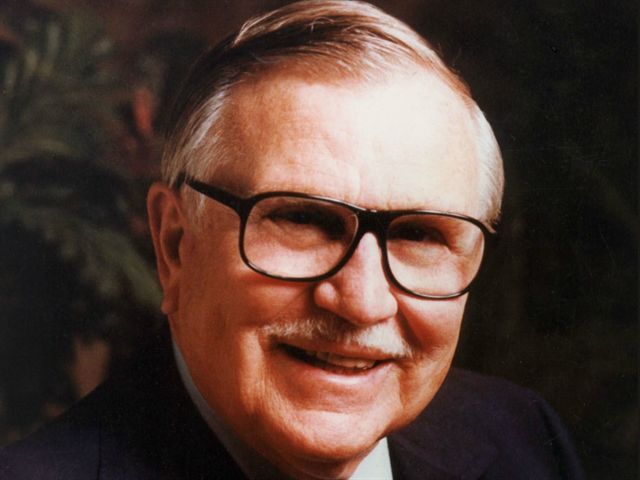
John Vernon McGeewas born in Hillsboro, Texas, in 1904. Dr. McGee remarked, "When I was born and the doctor gave me the customary whack, my mother said that I let out a yell that could be heard on all four borders of Texas!" His Creator well knew that he would need a powerful voice to deliver a powerful message.
After completing his education (including a Th.M. and Th.D. from Dallas Theological Seminary), he and his wife came west, settling in Pasadena, California. Dr. McGee's greatest pastorate was at the historic Church of the Open Door in downtown Los Angeles, where he served from 1949 to 1970.
He began teaching Thru the Bible in 1967. After retiring from the pastorate, he set up radio headquarters in Pasadena, and the radio ministry expanded rapidly. Listeners never seem to tire of Dr. J. Vernon McGee's unique brand of rubber-meets-the-road teaching, or his passion for teaching the whole Word of God.
On the morning of December 1, 1988, Dr. McGee fell asleep in his chair and quietly passed into the presence of his Savior.
Contact Thru the Bible with Dr. J. Vernon McGee
Mailing Address
Thru the Bible, Inc.
P.O. Box 7100
Pasadena, CA 91109
In Canada:
Box 25325,
London, Ontario
N6C 6B1
Phone Number
(626) 795-4145 or
(800) 65-BIBLE (24253)


