The Heart of the King - Part 1
Ministries > Unlimited Grace with Bryan Chapell
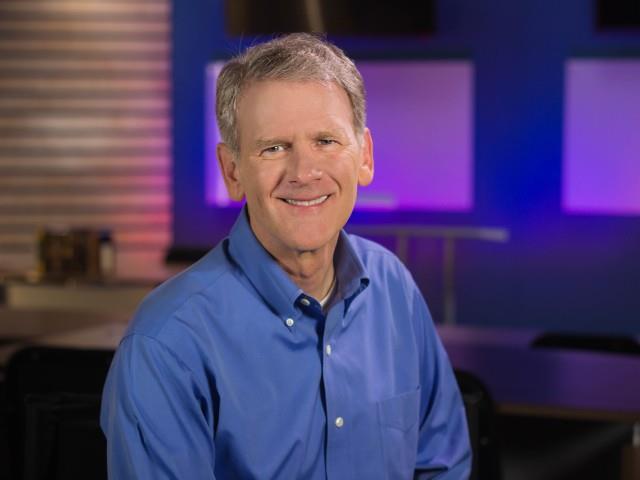
Pastor Bryan shares from the tenth chapter of John. In this beloved passage, Jesus describes himself as the Good Shepherd. Just as those who heard him understood, we can also see how Jesus is not only a gentle caregiver, but also a strong and selfless protector of His flock.
Guest (Male): If you had been on that crest of a hill, you would at the same time have had behind you what all the people of Jerusalem can see: the temple up at the top of the hill, with its great gates and the vast doors to let at times hundreds of thousands of people enter. And when Jesus in that setting is saying, "I am the door, and all that have gone before me are false," you must recognize people are doing the double-take. What do you mean, you are the door? You are the one? I mean, we've had other provision. And Jesus is saying, "No, I am the true door for the sheep."
Guest (Male): So glad you joined us for today's Unlimited Grace, the audio broadcast ministry of pastor and author Bryan Chapell. In today's lesson, Pastor Bryan shares from the 10th chapter of John. In this beloved passage, Jesus describes himself as the good shepherd. Just as those who heard him understood, we can also see how Jesus is not only a gentle caregiver, but also a strong and selfless protector of his flock. You can find this lesson and many others when you visit UnlimitedGrace.com. And while you're there, look for Pastor Bryan's book, Unlimited Grace. Dr. Chapell reminds us of the power and mercy of God's grace that motivates and inspires us to serve our heavenly Father. Let's hear now from Dr. Bryan Chapell as he shares the lesson, "The Heart of the King."
Bryan Chapell: I'll ask that you turn there in your Bibles to John 10. For many people, this may be the most favorite passage of Scripture. It's such a precious message you almost hate to touch it, to burst the bubble of its beauty. The key verse is verse 11. We'll cover a lot more of the chapter as we go, but verse 11, Jesus says: "I am the good shepherd. The good shepherd lays down his life for his sheep." Why do we need to know that? I think of a young woman some years ago in our church. She was the pride of our youth group. She was effervescent in personality, her eyes bright with welcome, her smile ready for anybody. And then somehow, as she got a little older, the smile seemed to be a smirk, as though she had inner knowledge of things that nobody else could see or understand. And the eyes that had been so bright, a certain slyness crept in that others could not explain, that her parents could not explain. I think even she could not explain. What she was doing is she was loving her family, loving her school, but also hearing the voices of mature friends who were calling her to experiment in things that she had not done before. She wanted both. She wanted the approval of friends, she wanted the affection of her family, and it was tearing her apart. Even she did not really know who she was. And her parents, trying to help, sent her to my office. No way that she wanted to be there. But because she wanted to deal with the turmoil, she tolerated me. And even as we talked, her personality and her expressions went from joy to sarcasm, tears to anger. And at some point I asked her, "Which of these is real? Is any of it real?" And she said to me, "I don't know," which may have been the first true thing that she said in the whole time.
Guest (Male): I can locate it in the experience of a teen, but you and I know that the question of which is the real me is at any phase of life when we're living in two worlds, responding to two voices. One life in church, another life at work. One life at work, another life on the weekends. One life in public, another life in secrecy of lust or addictions or doubt. And even we are saying, "Which is the real me? Who am I really?" And what Jesus is doing in John 10 is helping us settle that question of who am I really by first forcing us to understand who he really is. Do you understand? He is saying in this amazing chapter that he is the Savior for real. And you would think that is just obvious. In churches and religious settings, the people say Jesus is for real; we expect that. But you must understand, in John 10, it's the church people, it's the leaders who are saying, "We've got to get rid of this guy. He's doing miracles, he's doing great things, but that's forcing people to listen to him, and we don't want to hear that voice. It's challenging who we are." And Jesus recognizes that what he has to do to deal with the challenges is demonstrate his Messiahliness. He's done it first by power, the representation that he is, in fact, the king. He's checked off all the boxes. Born in Bethlehem? Check. Blood of Abraham? Check. Lineage of David? Check. Wind and waves obey him? Check. He has all the credentials of the Davidic king that they've been looking at for so long. But it is not enough to prove he is the long-sought Messiah.
Bryan Chapell: Even Jesus knows that. What is lacking? What is lacking is what was lacking in David himself. When David became King of Israel, the people gathered around in 2 Samuel 5, and they said, "The Lord said to you, David, you shall be shepherd of my people Israel, and you shall be the prince of Israel." He's royal and to be a shepherd at the same time. So interesting that the shepherd boy who comes out of the fields to be the king is told, "You stay a shepherd even as you are a king." It's those two qualities that are there that David did not himself fulfill and live. Do you remember there comes a time that Nathan the prophet will go to David, and he will tell a story to a shepherd about sheep? There once was a man who was very wealthy. He had lots of flocks, lots of sheep. But one day a visitor comes, and the rich man, wanting to provide a meal, knows he needs to provide a sheep, but he doesn't want to grab one of his own. That will diminish him. And so he takes the ewe lamb of a poor man that lives next door to him. That poor man had only the lamb. It was dear to him; it was special to him. But the rich man takes the ewe lamb for his own satisfaction. And David, hearing the story, said, "The man who did that deserves to die." And Nathan the prophet said to David, "You're the man. For you took Bathsheba from Uriah to be your own wife when she was dear to him. And then to keep away his challenge, you murdered him to take what was not yours. You were the king, but no shepherd have you been." And from that time on, the people of Israel are looking for the greater David, the one who will be both king and shepherd. Ezekiel the prophet says he will come in chapter 34, saying, "God says, I will rescue my flock. I will set over them one shepherd, my servant David, and he shall feed them and be their shepherd. And I the Lord will be their God, and my servant the shepherd shall be their prince." He will be royal, but he'll still have the heart of the shepherd that was lost in David. And now people look. Where is he? Oh yeah, here's this Jesus, the rabbi who seems to have all kinds of tricks up his sleeve. But is he the one we're looking for? When Jesus finally says in verse 11, "I am the good shepherd," we think of it as sentiment; isn't that sweet? You must know that what Jesus just did was he staked his flag and said, "I am the good shepherd." And that means he is going to have to prove that he has not just royal status, the lineage of David, power over wind and wave. Is he really a shepherd with a shepherd's heart for his people? Is that who he really is? And Jesus establishes that. He says he comes as he should, verses 1 and 2 of John 10. "Truly, truly, I say to you, he who does not enter the sheepfold by the door but climbs in another way, that man is a thief and a robber. But he who enters by the door is the shepherd of the sheep." I came in the front door. I didn't hide that I was coming. I came with the announcement of angels. I've shown by care for people that I am the good shepherd. It's been in all the papers. It's gone viral on YouTube. And in Temple Twitter, everybody's talking about it. You know who I am and what I have done.
Guest (Male): You're listening to Unlimited Grace, the audio broadcast ministry of pastor and author Bryan Chapell. Dr. Chapell is the president emeritus of Covenant Theological Seminary and the author of several books, including Unlimited Grace, the inspiration for this program.
Guest (Female): Change, real change is hard. In fact, some people would claim that no change is really possible. But the truth is, it is possible. You can be different. You can overcome your struggle with sin or that addiction. But it won't be happening simply by turning over a new leaf or trying a little harder. The real power of change is ignited when we take hold of God's amazing grace. And in the book, Unlimited Grace, by Pastor Bryan Chapell, he shows you how. Unlimited Grace takes you on a journey to discover how grace not only frees you from the guilt and shame of a sinful life, but also provides the daily fuel needed for joy and strength in your Christian life. Take hold of God's grace, and it is the key to finding true life change. Request your copy of Unlimited Grace—that's the title of the book—when you go online to UnlimitedGrace.com. And the web address again, UnlimitedGrace.com.
Bryan Chapell: But he doesn't just come as he should; he cares as he should. Verse 3: "To him, the one who comes in from the gate, the gatekeeper opens. The sheep hear his voice; he calls his own sheep by name and leads them out." There are many flocks in a big sheepfold. But the sheep of the shepherd, this shepherd, hear his voice, and he calls them by name, and they come and follow him. So much being said at once. The Jews would know the significance. He calls them by name? But the maker of the heavens calls his sheep by name. The 147th Psalm says not only does God determine the number of stars, he calls them each by name. Science is telling us this day it's hard for us even to comprehend the number of stars in the heaven. It's more than the grains of sand on every beach of all the oceans of all the world. That many stars, and he calls them by name. But even as he has the capacity for that vastness, he knows his sheep and calls them by name. We sing about it: "I have a maker, he formed my heart before even time began. My life was in his hand. He knows my name, he knows my every thought, he sees the tears that fall, and hears me when I call." It's just astounding that the God of infinity could be so intimate in his care that he knows each of us by name. But maybe even more special as you continue through verse 3: "The sheep hear his voice, he calls his own sheep by name..." End of verse 3: "...and leads them out." Verse 4: "When he's brought out all his own, he goes before them, and the sheep follow him, for they know his voice." He calls them to follow him, but he leads. He goes in front. And we love the image of he's facing danger before us. He's leading down the path that we don't know, but he knows. And we need that image.
Guest (Male): And the Israelis think we're just crazy. But we know what's happening. Something dear in us, we've been taught many of us since we were children that Jesus is that good shepherd. He's not driving his sheep. He's leading them to good pastures. "The Lord is my shepherd, I shall not want. He makes me to lie down in green pastures. He leads me beside still waters. He restores my soul. He leads me in the paths of righteousness for his name's sake." And that means even though I go through the valley of the shadow of death, I will fear no evil. My shepherd is leading me. And it means so much to us to say, "Jesus is saying I am that shepherd that is leading you. Even when you face hard things, I'm before you. I'm on the path ahead of you. I'm taking you to those pastures that I know are best for eternity." I can remember the very first funeral as a young pastor that I needed to do, of a young person who had been accidentally killed. And just feeling totally inadequate. What would I say? What would I do? How would I bring any comfort to these parents who had such trauma in their lives? And I can remember, even as I was driving, the only thing I knew to do was to pray through song. "He leadeth me, oh precious thought, oh words with heavenly comfort fraught. Whatever I do, wherever I be, still 'tis God's hand that leadeth me." God, I can go anywhere if you'll lead. I'll follow you anywhere if you lead.
Guest (Male): What does that mean? It is so interesting after Jesus says these precious things, that verse 6 says: "This figure of speech Jesus used with them, they did not understand what he was saying to them." I'm the good shepherd, I lead, I call; they did not understand that. And so he clarifies it, makes another run at it. What does he say? Verse 7: "Jesus again said to them, Truly, truly, I say to you, I am the door of the sheep." What's he saying? Ed Watts is a writer who once went to the Holy Land and talks about being on the crest of a hill that some of us have been on, where you look out over the shepherd's fields towards Jerusalem. And she talked about being on that crest of the hill and then going with her guide down into the shepherd's field, and they came to a sheepfold. And they kind of went in to look around a little bit. And while they were there, the shepherd came, looking like Moses, she said. Now, I don't know how she knew what Moses looked like, but she said, "Here comes the shepherd, looking like Moses." And as he got there, the people asked, "Where's the door for your sheepfold?" I mean, there's kind of rocks against a rock bank, but there's no door at the opening. And she said the shepherd just thought, oh, these crazy Americans. And he just lay down with his feet at one end of the opening, his head at the other, to make clear, "I am the door." And Jesus, when he says, "I am the door for the sheep," is saying precisely that. He cares as he should, he calls people, but he's actually providing what they need. He is the true door. "I am the door for the sheep. If you had been on that crest of a hill, you would at the same time have had behind you what all the people of Jerusalem can see: the temple up at the top of the hill, with its great gates and the vast doors to let at times hundreds of thousands of people enter." And when Jesus in that setting is saying, "I am the door, and all that have gone before me are false," you must recognize people are doing the double-take. "What do you mean, you are the door? You are the one? I mean, we've had other provision." And Jesus saying, "No, I am the true door for the sheep" in verse 7. And in verse 8, "All who came before me are thieves and robbers, but the sheep did not listen to them." Verse 9: "I am the door. If anyone enters by me, he will be saved and go in and out and find pasture." What does it mean that Jesus is the door? He's providing pasture and he's providing protection. If he opens the door, the sheep can go to green pastures. When they go in at night, he's the protector. So that verse 10: "The thief who comes only to steal and kill and destroy" is taken care of how? "I came that my sheep may have life and have it abundantly." I am providing for my sheep.
Bryan Chapell: How does he do that? This side of the cross, we understand verses 12 through 15 so much more clearly. Jesus describes there are people who say they are shepherds, but they're just hirelings. So that when danger comes, when there's difficulty, the hireling runs away. Why should I sacrifice myself for this little bit of pay? But verse 15, Jesus summarizes his role: "Just as the Father knows me and I know the Father, I lay down my life for the sheep." We know what he's talking about. He's the door. He's making provision more than all the sacrifices that have happened before. He is the one who will lay down his life for the sheep. He will do it to claim the penalty for our sin, that our guilt and shame might be put on him because he went ahead of us and took on himself the penalty we deserved. He is that good shepherd. Hello, friends, this is Pastor Bryan. Thank you so much for listening today. I know that right now there are many within the sound of my voice who may be suffering under serious trials. Maybe your trial is a physical illness, or maybe it's a mental or emotional trial from loss or fear or anger that afflicts you with depression or anxiety. Whatever it is, God sees, God hears, and God knows. So right now I'm going to pray for you. And we're going to trust God to do a work in your mind, your heart, and your body by the power of his Holy Spirit. Heavenly Father, when your Son was on this earth, he pointed to the flowers of the field and said that you make them beautiful, even when they do not last very long. He reminded us that you care for the birds of the air, even though they cannot care for themselves, and that you love us far more than they. And the greatest evidence of your wisdom, power, and love is that you sent Jesus to live and die for each of us. Father, if you care so much for the flowers of the field, the birds of the air, and the eternity of our souls, please let us rest in the assurance of your holy, wise, and powerful will for what is best in our lives. We know the will of God will never take us where the grace of God will not keep us. So heal, strengthen, and forgive as you know is best. Then we will be truly blessed and find the rest of mind, body, and heart that you promise for all who love you. We pray this in Jesus' name. Amen.
Guest (Male): That's Pastor Bryan Chapell, and you've been listening to Unlimited Grace. If you've been blessed by this message and would like to hear more from Dr. Chapell, I would encourage you to visit UnlimitedGrace.com. In addition to messages from Pastor Bryan, you can explore the many sermons, podcasts, seminars, and more available to you. Also, be sure to request a copy of the book from Dr. Bryan Chapell called Unlimited Grace. We'll send you a copy right away as our way of saying thank you for your most generous financial support. Once again, go to UnlimitedGrace.com or you can give by calling 844-41-GRACE. That's 844-414-7223. Please be sure to join us next time as once again we endeavor to put Christ at the center of our efforts so that lives might be transformed by his unlimited grace. This ministry is brought to you by Unlimited Grace Media and continues to be made possible with your generous financial support.
Related Episodes
The Heart of the King - Part 2
Wednesday, August 26
The Parables of The King - Part 2
Monday, August 24
The Parables of The King - Part 1
Friday, August 21
About Unlimited Grace
Unlimited Grace is dedicated to spreading the gospel of God’s grace to all people. We desire for believers everywhere to serve God through faith in His grace that frees from sin and fuels the joy of transformed lives.About Bryan Chapell
Bryan Chapell, Ph.D. is the Stated Clerk Pro Tempore of the Presbyterian Church in America (PCA), based in Lawrenceville, GA.
Dr. Chapell is an internationally renowned preacher, teacher, and speaker, and the author of many books, including Each for the Other, Holiness by Grace, Praying Backwards, The Gospel According to Daniel, The Hardest Sermons You’ll Ever Have to Preach, and Christ-Centered Preaching, a preaching textbook now in multiple editions and many languages that has established him as one of this generation’s foremost teachers of homiletics.
Dr. Chapell is passionate about sharing the truth of God's grace with others, because it provides the freedom and fuel for transformed lives of joy and peace.
He and his wife, Kathy, have four adult children, a growing number of grandchildren, and lives rich with friends, fishing and faith.
Contact Unlimited Grace with Bryan Chapell


